Raising awareness of off-grid solar photovoltaic standards: The ‘ROGEAP’ provides training for stakeholders in Chad.
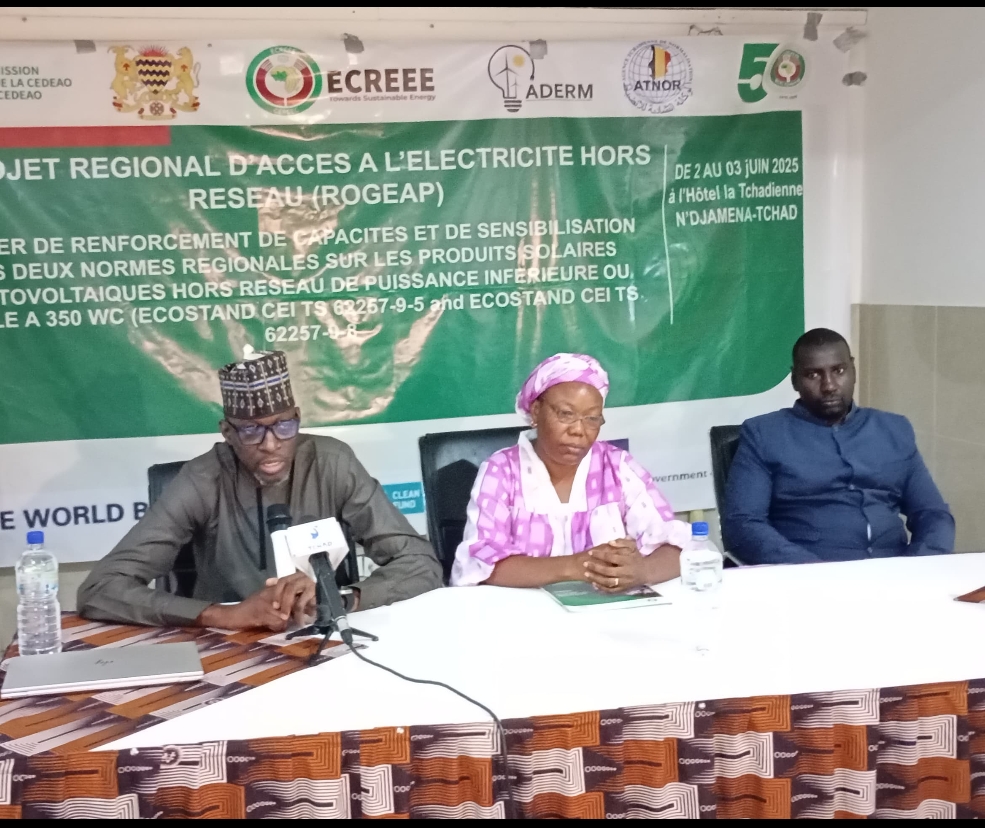
(2 June 2025, N’DJAMENA, Republic of Chad).
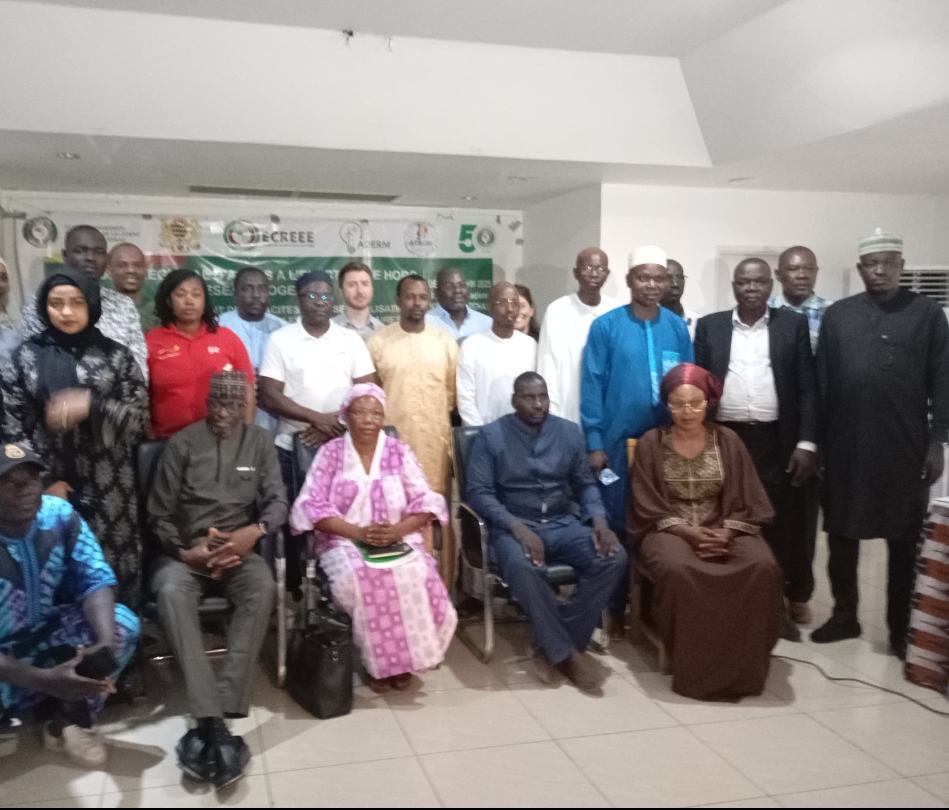
Just over thirty participants, mainly from the Ministries responsible for Energy, Industry and Trade, and other national bodies such as standardisation agencies, rural electrification agencies, renewable energy, the private sector and consumer associations gathered in N’DJAMENA in the Republic of Chad from 2 to 3 June 2025 for training and awareness-raising on off-grid solar photovoltaic standards as part of the ROGEAP project.
(ECOSTAND IEC TS 62257-9-5 and ECOSTAND IEC TS 62257-9-8).
The main aim of this workshop is to enable the various national stakeholders to gain a thorough understanding of the two standards relating to off-grid solar photovoltaic products with a power rating of 350 Wp or less (ECOSTAND IEC TS 62257-9-5 and ECOSTAND IEC TS 62257-9-8) in order to facilitate their implementation at national level.
At the end of this two-day meeting, the various participants will be required to:
- Have a good understanding of quality standards for off-grid solar products and stand-alone PV kits;
- To familiarise oneself with the definitions, quality standards and their test methods;
- To be able to provide accurate information to other relevant stakeholders regarding the two adopted standards and to raise awareness amongst the general public;
- To understand how the two standards are to be implemented in accordance with current legislation;
- To be able to carry out conformity assessments of off-grid solar PV products (in accordance with standards), market surveillance and;
- To be able to disseminate information to the general public.
In their statements, the various representatives from the Ministries of Trade and Energy thanked ECOWAS, through ROGEAP, for assisting stakeholders in Chad with the implementation of these standards and committed to ensuring their widespread dissemination at all levels.
As a reminder, the ROGEAP is a project jointly funded by the World Bank, the Clean Technology Fund and the Government of the Netherlands, and it covers 19 countries in Saharan Africa.
It is implemented by the ECOWAS Commission through the Department of Infrastructure, Energy and Digitalisation.
—————END—————–
For further information, please contact:
Communications Directorate, ECOWAS Commission
Twitter: @ecowas_cedeao – Facebook: Ecowas-Cedeao